


CORPORAL:
The corporal was established in 1775 with the birth of the Army and the NCO corps. Along with the rank of sergeant, the corporal is the only rank that has never disappeared from the NCO corps. The corporal is the base of the NCO ranks, serving as leader of the smallest Army units, principally; teams leaders. Like sergeant, corporals are responsible for the individual training. As the command sergeant major is known as the epitome of success in the NCO corps, the corporal is the beginning of the NCO corps. As the NCO corps is known as the backbone of the Army, the corporal is the backbone of the NCO corps.

LANCE CORPORAL
Lance Corporals are required to supervise a small team of up to four soldiers called a section.
They also have opportunities to specialise and undertake specialist military training.
title

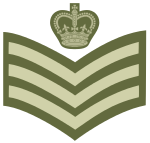
STAFF SERGEANT
The staff sergeant is a more experienced leader of soldiers. It is proper to expect that the staff sergeant can bring the benefits of that experience to bear in any situation and under all circumstances.The major difference between the staff sergeant and the sergeant is not authority, as is often mistakenly believed, but rather sphere of influence.
The staff sergeant is in daily contact with large numbers of soldiers and generally has more equipment and other property to maintain. Staff sergeants often have one or more sergeants working under their leadership. Staff sergeants are responsible for their continued successful development as well as that of other soldiers in the section, squad or team.
SERGEANT:
Of all the NCO ranks, this one, very possibly, has the greatest impact on lower-ranking soldiers. Privates, who are the basic manpower strength of the 4th, generally have sergeants as their first NCO leaders. It is to the rank of sergeant that the privates look for example. Sergeants are responsible for the individual training of their soldiers. The authority of the sergeant is equal to that of any other NCO rank. The sergeant must be unquestionably competent in order to carry out the mission correctly, accomplish each task and care for assigned soldiers.The rank of sergeant is not a position in which to learn how to become a leader - no apprenticeship here. While certainly the new sergeant will be developed new skills, strengthening old ones and generally better,they are a sergeant, and are no less a professional than those grades of rank to come.

It is stressed that promotion is given on ability and the
existence of a suitable vacancy and not on the length of service or seniority.
Charge to the Noncommissioned Officer
I will discharge carefully and diligently the
duties of the grade to which I have been
promoted and uphold the traditions and
standards of the 4th Royal Welch Fusiliers.
I understand that soldiers of lesser rank
are required to obey my lawful orders.
Accordingly, I accept responsibility for
their actions. As a noncommissioned
officer, I accept the charge to observe and
follow the orders and directions given by
supervisors acting according to the laws,
articles and rules governing the discipline
of the 4th, I will correct conditions
detrimental to the readiness thereof. In so
doing, I will fulfill my greatest obligation
as a leader and thereby confirm my status
as a noncommissioned officer.
We must always be an NCO Corps that
- Leads by Example
- Trains from Experience
- Maintains and Enforces Standards
- Takes care of Soldiers
- Adapts to a Changing World
Role of a JNCO
- Drill (giving orders forming and moving a squad)
- Leadership
- Command tasks
- Discipline
SERGEANT MAJOR:
When you are talking about the first sergeant, you are talking about the lifeblood of the 4thRWF. There can be no substitute for this position or any questions of its importance. When first sergeants are exceptional, their units are exceptional, regardless of any other single personality involved. Perhaps their ranks insignia should be the keystone rather than the traditional one depicted here. It is the position of first sergeant in which almost all unit operations merge.The first sergeant holds formations, instructs platoon sergeants the commander and assists in training all enlisted members. The first sergeants is proud of the unit and, understandably, wants others to be aware of the unit's success.
For the first time, the title of address for this grade is not sergeant. "first sergeant." There is a unique relationship of confidence and respect that exists between the first sergeant and the commander not found at another level within the 4th.The master sergeant serves as the principal NCO in staff elements at battalion and higher levels. Although not charged with the enormous leadership responsibilities of the first sergeant, the master sergeant is expected to dispatch leadership and other duties with the same professionalism and to achieve the same results as the first sergeant.


